
Drum Terminology: How to Choose the Right Steel Drum for Your Application
If you are sourcing steel drums for the first time or reevaluating a current supplier, drum terminology can feel unnecessarily complex. Understanding the difference between drum types, components, and configurations is critical to choosing the right industrial packaging solution and avoiding unnecessary fees, delays, or performance issues.
This guide breaks down common drum terminology and explains how it applies to real-world buying decisions, from selecting a 55 gallon steel drum to understanding when you need an open head drum versus a tight head drum.
Why Drum Terminology Matters When Buying Steel Drums
Not all steel drums are built or specified the same. Misunderstanding terminology can lead to:
-
Ordering the wrong drum configuration
-
Paying extra for unnecessary features
-
Compliance issues for regulated or hazardous materials
-
Performance problems during filling, transport, or storage
A knowledgeable steel drum manufacturer or steel drum supplier should help clarify these terms and guide you to the right solution based on your product, process, and shipping requirements.
Key Steel Drum Components You Should Know
Understanding these terms helps avoid confusion when reviewing quotes or specifications:
Chime
Rolling Hoops
Side Seam
Head Fitting
Bolt Ring
Common Steel Drum Configurations
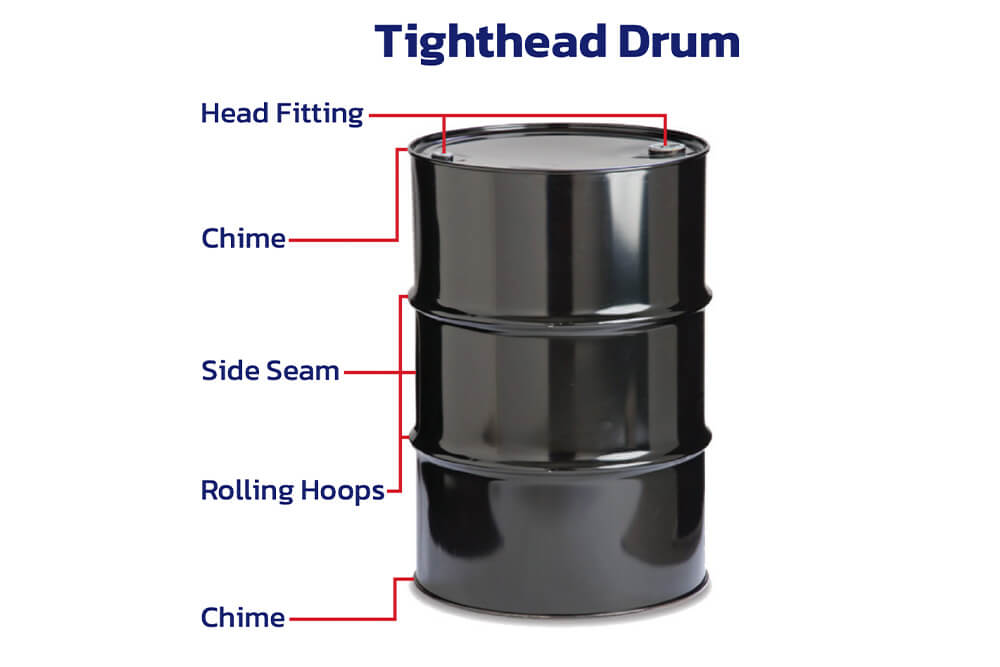
Tight Head Drum
Best for: Liquids and hazardous materials
A tight head drum has a permanently sealed top with threaded fittings (bungs) for filling and dispensing.
Common capacities:
-
55-gallon
-
30-gallon
Key components include:
-
Head fittings (bungs)
-
Chime (reinforced top and bottom rim)
-
Side seam
-
Rolling hoops
Buying tip
Tight head drums are commonly used for regulated materials where leak prevention and compliance are critical.
Open Head Drum
Best for: Solids, semi-solids, or products requiring full top access
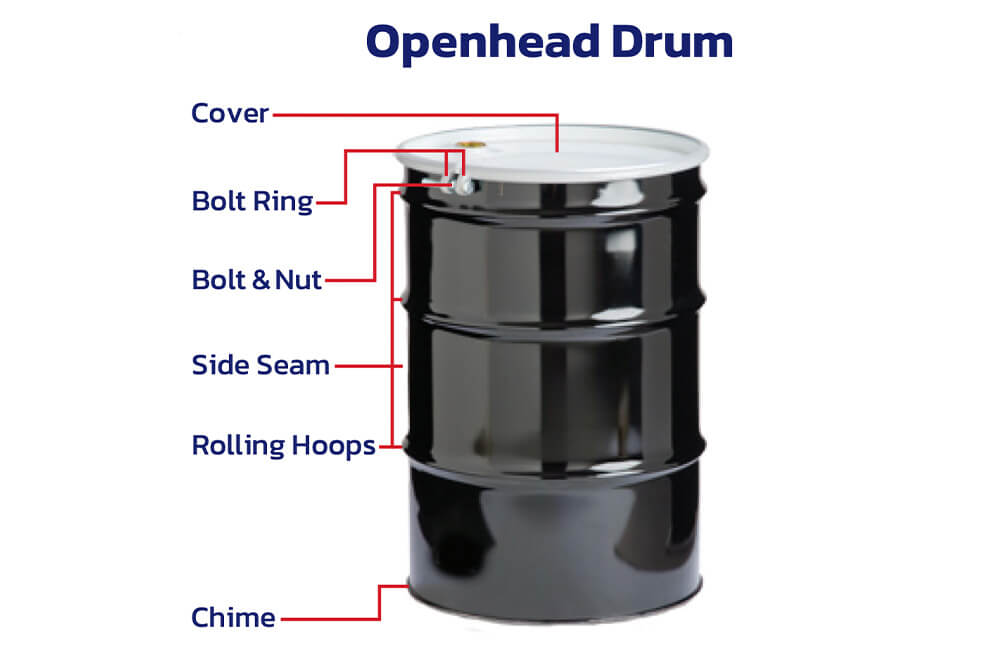
An open head drum includes a removable cover secured with a bolt ring.
Common capacities:
-
55-gallon
-
30-gallon
Key components include:
-
Removable cover
-
Bolt ring with bolt and nut
-
Gasket
-
Side seam
-
Rolling hoops
Buying tip
Open head drums offer flexibility but require proper closure to maintain performance ratings.
Corrugated Drum
Best for: Added strength and stacking performance
Corrugated drums feature ribbed sidewalls that improve structural integrity.
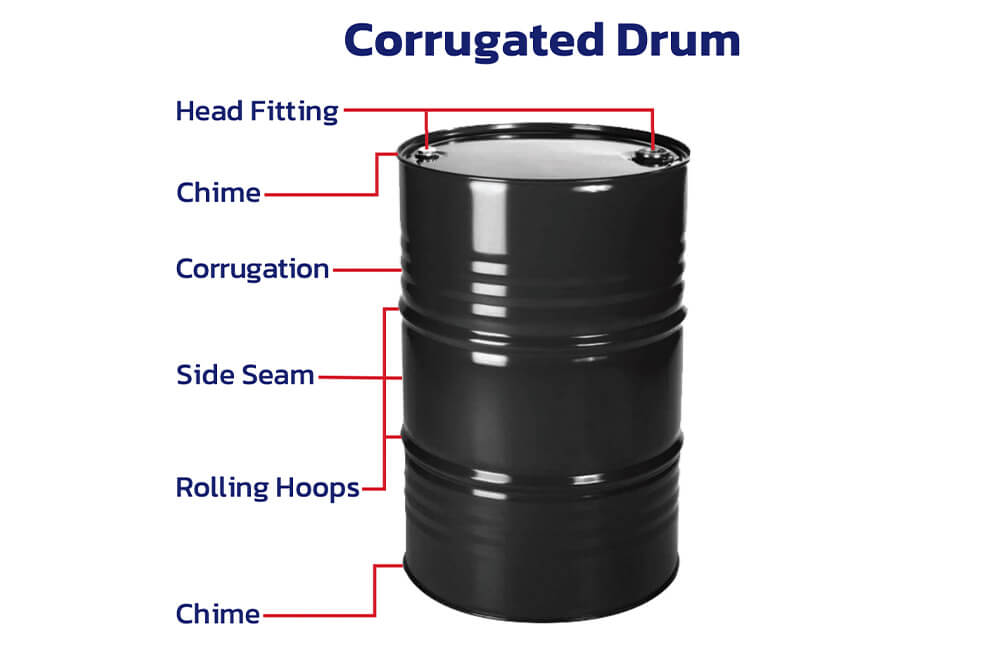
Key components include:
-
Corrugation ribs
-
Head fitting
-
Side seam
-
Rolling hoops
Buying tip
Agitator drums are specialized solutions and should be specified early to avoid custom modification fees.
Steel Agitator Drum
Best for: Products that require mixing before or during dispensing
Agitator drums include internal or external mixing components.
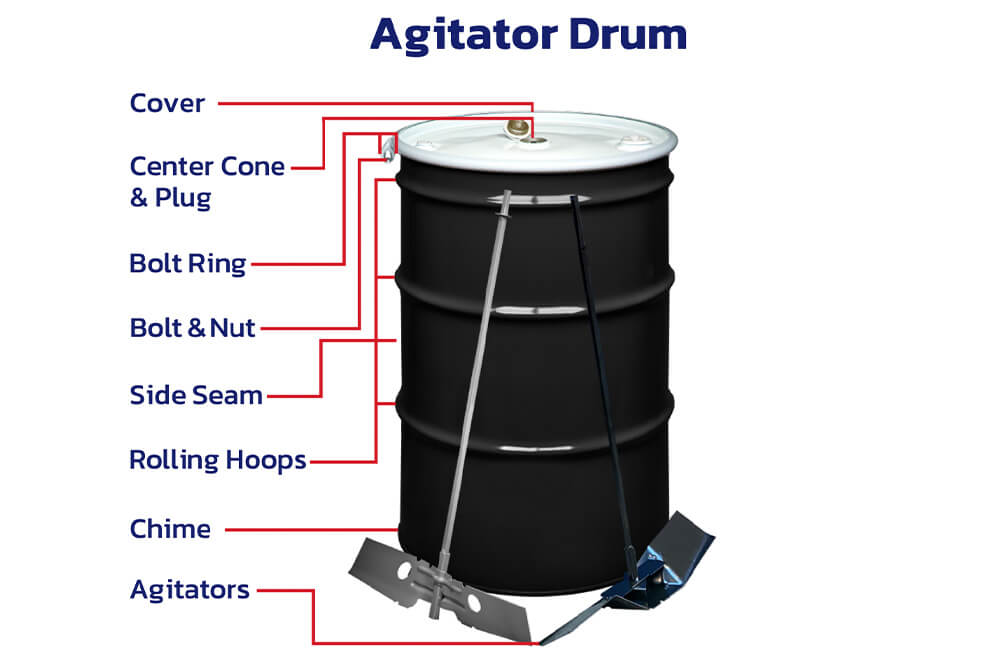
Key components include:
-
Center cone and plug
-
Agitators
-
Bolt ring and cover
-
Side seam
Buying tip
Corrugation may add cost but can improve durability during handling and transport.
Intermediate Drum
Best for: Specialty liquid applications
Intermediate drums are designed for lower-volume liquid applications and are commonly used in specialty chemical and beverage environments. These drums are available in multiple configurations to match filling equipment and handling needs.
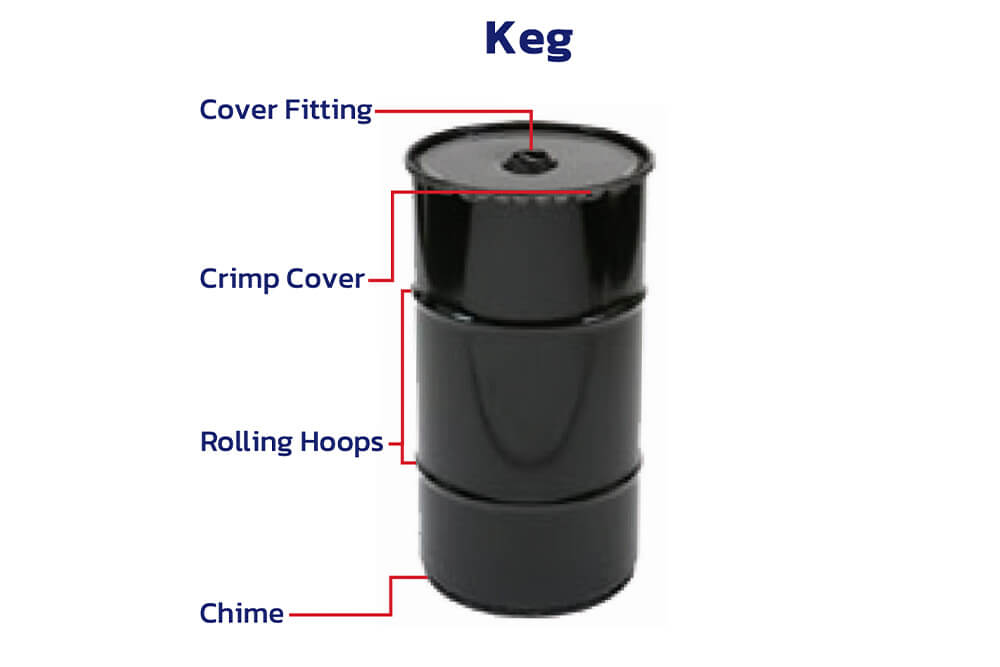
Common capacities:
-
20-gallon
-
10-gallon
Available configurations:
-
Standard top
-
Keg configuration with a crimped cover top and smaller opening
Buying tip
Opening size, top configuration, and compatibility with existing filling equipment are key considerations when selecting an intermediate drum.
How to Know Which Steel Drum to Buy
When choosing the right steel drum, consider these questions:
Is your product liquid, solid, or semi-solid?
Does it require regulated or hazardous materials packaging?
Do you need full top access or controlled dispensing?
Is a standard 55 gallon steel drum sufficient, or do you need a specialty configuration?
Are there any handling, stacking, or material-mixing requirements, and will the product be filled hot or cold?
A reliable steel drum supplier will help you answer these questions before an order is placed. If you have questions about which drum is right for you, our team members are here to help.
Avoiding Unexpected Costs and Fees
Extra costs often come from:
Clear terminology and early specification discussions help prevent these issues.
Why Work With North Coast Container?
Steel drums are not one-size-fits-all, and having the right partner makes the difference. As the largest independent manufacturer of steel drums in North America, North Coast Container pairs nationwide manufacturing capabilities with team members who take the time to understand your application and provide clear, practical guidance.
Frequently Asked Questions
An open head drum has a removable lid secured with a bolt ring, while a tight head drum has a sealed top with threaded bungs for dispensing liquids.
A 55 gallon steel drum is the most common size used for industrial packaging and works for many liquid and solid products, depending on configuration.
Corrugated drums may have a higher upfront cost, but they can offer improved strength and durability during transport and storage.
If your product requires mixing, unique filling methods, or enhanced performance, a specialty or agitator drum may be necessary.